
Smart Kitchen Lighting Ideas for Daily Use
Key Takeaways
|
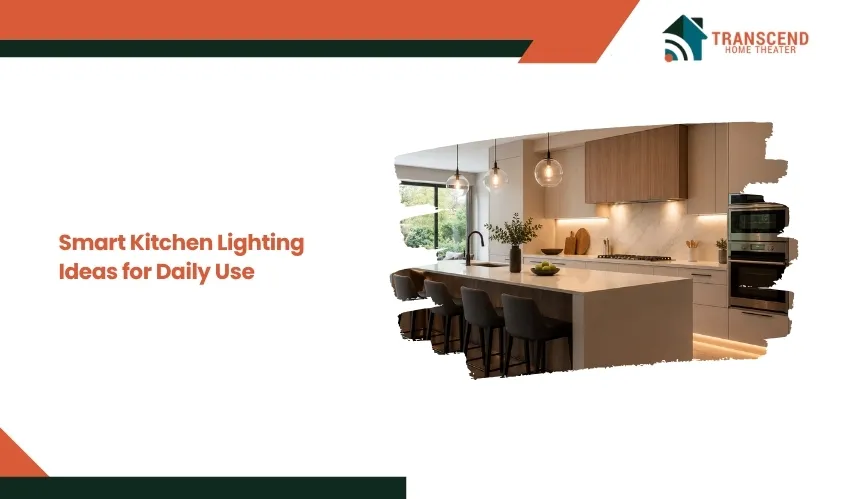
A well-designed smart kitchen lighting system does more than turn lights on and off remotely. It allows each kitchen activity, from food preparation to late-night movement, to have the right brightness, color temperature, and control method without relying on a single overhead fixture. This guide explains practical smart kitchen lighting ideas that make everyday routines more efficient, comfortable, and easier to manage.
How Does Smart Lighting Improve Everyday Kitchen Use?
Smart kitchen lighting improves everyday use by adjusting light levels to match different activities instead of relying on one fixed setting. Separate control over ambient, task, and accent lighting allows the kitchen to provide bright illumination for cooking, comfortable lighting for dining, and subtle lighting for nighttime movement.
Unlike traditional lighting, smart systems let homeowners control individual kitchen zones rather than switching on every fixture at once. This creates better visibility where it is needed while reducing unnecessary energy use in areas that are not in use.
Automation also makes daily routines more convenient. Lights can turn on according to schedules, respond to motion, or activate with a voice command, reducing the need to operate switches while cooking or carrying items.
The most effective smart kitchen lighting setup combines automation with simple manual controls, creating a space that is easier to use, more comfortable throughout the day, and adaptable to changing household routines.
Best Smart Kitchen Lighting Ideas for Each Zone
A practical smart kitchen lighting plan starts by treating the kitchen as a collection of work zones rather than one open space. Assigning the right type of lighting to each area improves visibility where it matters most while allowing every zone to operate independently.
Smart Under-Cabinet Lights for Countertops
Under-cabinet lighting is one of the most effective upgrades for food preparation areas because it delivers light directly onto the countertop. This placement reduces the shadows created by overhead fixtures, making chopping, measuring, and other detailed tasks easier.
Dimmable LED light strips or linear fixtures provide consistent illumination and can be adjusted for different activities. Installing diffusers also helps distribute light evenly and minimizes glare on polished countertops.
Zoned Ceiling Lights for General Illumination
Ceiling lights provide the primary source of ambient lighting, but they are more effective when divided into separate control zones. For example, the cooking area, kitchen island, and walkways can each operate independently instead of relying on a single switch.
This zoning gives homeowners greater flexibility, allowing only the required areas to be illuminated while maintaining balanced light throughout the kitchen.
Smart Pendant Lights Over Islands and Tables
Pendant lights combine task lighting with visual appeal, making them well suited for kitchen islands and dining areas. Bright settings support meal preparation or reading recipes, while dimmed lighting creates a more relaxed atmosphere for casual meals and entertaining.
Selecting dimmable smart pendants allows these spaces to adapt easily without replacing fixtures or changing bulbs.
Toe-Kick and Cabinet Lights for Low-Level Visibility
Toe-kick lighting beneath base cabinets and lighting inside cabinets improve visibility without adding excessive brightness. These fixtures are particularly useful during the evening or at night, when low-level illumination is sufficient for moving safely through the kitchen or locating stored items.
When paired with motion sensors or schedules, these lights provide convenient guidance without requiring the main ceiling lights to turn on.
Create Smart Lighting Scenes for Daily Kitchen Routines
Smart lighting scenes combine multiple fixtures into preset settings that match specific activities. Instead of adjusting individual lights every time the kitchen is used, a single command, schedule, or automation can activate the appropriate brightness and lighting zones for the moment.
Morning and Breakfast Scene
Morning routines benefit from bright, neutral lighting that helps improve visibility without feeling overly harsh. Ceiling lights can provide general illumination, while under-cabinet lights brighten countertops for preparing breakfast or making coffee.
Scheduling this scene to activate before the household wakes up creates a kitchen that is ready for use without requiring manual adjustments.
Cooking and Food Preparation Scene
Food preparation demands the highest level of functional lighting. A cooking scene should prioritize under-cabinet lighting, ceiling lights above work areas, and island lighting to reduce shadows on countertops.
This approach focuses light where precision matters most while avoiding unnecessary brightness in dining or decorative areas.
Dining and Entertaining Scene
Once meal preparation is complete, the lighting can shift to create a more comfortable environment. Lower brightness levels combined with warmer white light help reduce visual intensity while maintaining enough illumination for dining and conversation.
Pendant lights above the island or dining table often become the primary focus during this scene, while task lighting can remain dimmed or turned off.
Many homes across Maryland feature kitchens that function as both workspaces and social gathering areas. Smart lighting scenes allow the space to transition seamlessly from food preparation to dining and entertaining with minimal user input.
Cleaning and Late-Night Scenes
Cleaning requires bright, even illumination across the kitchen so spills, grease, and debris are easier to spot. A dedicated cleaning scene can activate ceiling lights and task lighting together for maximum visibility.
For nighttime use, a separate scene with dim toe-kick or under-cabinet lighting provides enough light to move through the kitchen safely without disturbing others or exposing the eyes to bright overhead lighting.
Use Automations That Reduce Effort, Not Add Complexity
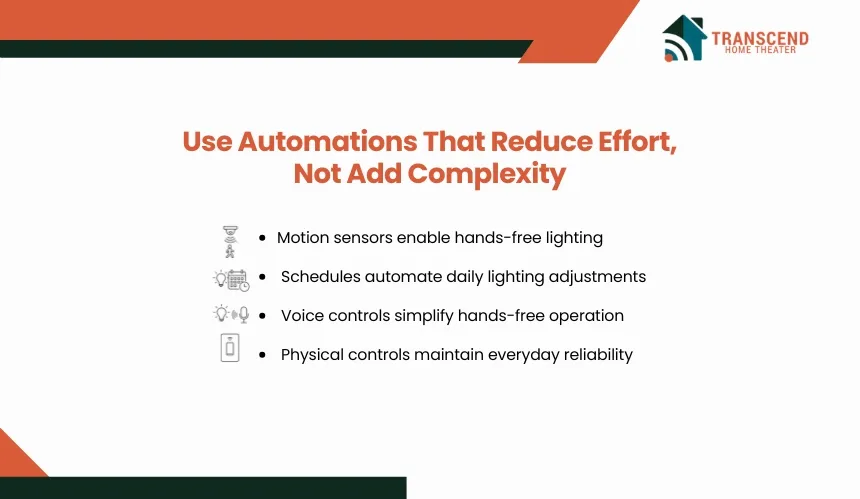
Smart lighting automation should simplify everyday tasks rather than introduce unnecessary controls. The most effective automations are predictable, easy to manage, and based on routines that occur regularly in the kitchen.
Motion and Presence-Based Lighting
Motion sensors are well suited for areas that benefit from hands-free operation, such as walkways, pantries, or toe-kick lighting. They can automatically illuminate the space when someone enters and switches off after a set period of inactivity.
Sensor settings should be adjusted carefully to prevent lights from turning on unnecessarily during daylight hours or switching off while someone is still working in the kitchen.
Schedules and Time-Based Adjustments
Scheduled lighting removes the need for repeated manual adjustments throughout the day. Lights can brighten in the morning, transition to warmer tones in the evening, or switch off automatically at bedtime.
Time-based routines also help maintain consistent lighting habits while reducing the likelihood of lights being left on when they are no longer needed.
Voice, App, and Physical Controls
Different control methods serve different purposes in a smart kitchen. Voice commands provide convenient hands-free operation while cooking, and mobile apps make it easy to adjust scenes or schedules from anywhere.
At the same time, smart switches or wall keypads ensure the lighting remains simple for everyone in the household to operate. Combining automation with reliable manual controls creates a system that is both convenient and practical for daily use.
Many Maryland homes feature kitchens that serve as the central gathering space for cooking, dining, and entertaining. Well-planned lighting automations allow each activity to transition smoothly without repeated manual adjustments.
Pairing these automations with professional smart lighting installation in Maryland ensures lighting zones, fixtures, and controls work together reliably while adapting to changing household routines. The result is a kitchen that delivers the right illumination for every task, every time.
Get Brightness, Color Temperature, and Placement Right
Even the most advanced smart lighting system cannot compensate for poor lighting design. Selecting the appropriate brightness, color temperature, and fixture placement ensures every lighting scene delivers consistent visibility, comfort, and performance throughout the kitchen.
Maryland’s changing daylight patterns throughout the year make flexible lighting especially valuable. Automatically adjusting brightness and color temperature helps the kitchen remain comfortable from bright summer mornings to darker winter evenings.
Match Brightness to the Kitchen Activity
Different kitchen tasks require different light levels. Food preparation areas benefit from brighter illumination that improves visibility on countertops, while dining spaces are generally more comfortable with reduced brightness. Independent dimming for each lighting zone allows the kitchen to adapt without affecting the entire room.
Adjust Color Temperature Throughout the Day
Color temperature influences both the appearance of the kitchen and visual comfort. Neutral or cooler white light provides better clarity during cooking and cleaning, while warmer white light creates a more relaxed atmosphere for family meals and evening use. Tunable white smart lighting allows these adjustments to occur automatically based on schedules or selected scenes.
Prevent Shadows, Glare, and Uneven Lighting
Proper fixture placement is just as important as smart controls. Under-cabinet lighting should illuminate the countertop directly, pendants should be centered over islands, and recessed lights should be positioned to avoid casting shadows from the person working below.
Careful placement also minimizes glare on polished surfaces and produces more even light across the kitchen, allowing every automated scene to perform as intended.
Choose the Right Smart Lighting Setup for Your Kitchen
Selecting the right smart lighting setup depends on your existing electrical system, renovation plans, and how you expect to control the lights every day. Prioritizing compatibility and ease of use creates a system that remains reliable as your needs change.
Smart Bulbs vs. Smart Switches
Smart bulbs are a practical option for individual fixtures or lamps where independent control is the priority. Smart switches, however, are often better suited for ceiling lights with multiple bulbs because they control the entire circuit while preserving familiar wall-switch operation.
The right choice depends on how the lighting is wired and whether individual fixtures or complete lighting zones need to be automated.
Retrofit Options vs. Remodel-Ready Systems
Existing kitchens can often be upgraded with smart bulbs, wireless switches, and under-cabinet LED lighting without extensive electrical work. During a kitchen remodel or new construction, hardwired lighting circuits and dedicated control systems offer greater flexibility for zoning, automation, and future expansion.
Planning these features during construction also reduces the need for modifications later.
Compatibility, Connectivity, and Manual Backup
Before investing in smart lighting, verify that all devices communicate through a compatible ecosystem and support the preferred control methods. Consistent connectivity between switches, fixtures, sensors, and voice assistants helps automations operate reliably.
Equally important is maintaining manual control through wall switches or keypads, ensuring the kitchen remains easy to use regardless of network or app availability.
Start With the Most Frequently Used Zones
A complete smart lighting system does not have to be installed all at once. Beginning with high-use areas, such as under-cabinet task lighting, ceiling lights above workspaces, or kitchen island pendants, delivers immediate improvements while allowing the system to expand over time.
This phased approach makes it easier to evaluate daily lighting needs and add new zones or automations without replacing existing components.
Ready to make your kitchen lighting smarter and easier to use every day? Transcend Home Theater designs and installs customized home automation and smart lighting systems for homeowners across Maryland, Northern Virginia, and Washington, DC. Whether you’re upgrading a single kitchen or planning a whole-home automation project, our team can create a lighting solution that fits your lifestyle.
Frequently Asked Questions
Will smart kitchen lights still work if the Wi-Fi or internet goes down?
That depends on the control architecture. Hardwired smart switches should still provide manual control, while systems using a local hub or dedicated wireless protocol can often continue operating inside the home. Cloud-based voice commands, remote app access, and some automations may remain unavailable until connectivity returns.
Why do smart kitchen lights flicker, buzz, or fail to dim smoothly?
Flickering and buzzing usually indicate an electrical compatibility issue rather than an automation fault. Common causes include non-dimmable LEDs, mismatched dimmers, loads below the control’s minimum rating, or no-neutral devices passing a small current through the fixture. Manufacturer compatibility tools can help identify the appropriate bulb, driver, or dimmer.
Can smart switches be installed in an older kitchen without a neutral wire?
Some smart dimmers and switches support no-neutral wiring, but they are not compatible with every LED fixture or circuit. The switch box should be inspected before selecting equipment. A professional can confirm the wiring layout, connected load, multi-location controls, and whether a bypass component or alternative control method is required.
How do I stop guests or family members from disabling smart bulbs at the wall switch?
Smart bulbs lose connectivity when a conventional wall switch cuts their power. A better setup keeps the circuit energized and provides control through a wireless keypad, smart button, scene controller, or wall module. These controls should resemble familiar switches so guests can operate the kitchen without relying on voice commands or an app.
Do smart lights use electricity when they are turned off?
Connected bulbs and switches consume a small amount of standby power so their radios and control electronics remain active. ENERGY STAR criteria set low standby limits for qualifying connected lighting and smart switches. Scheduling, occupancy control, and preventing unnecessary illumination can still produce net energy savings in a properly configured kitchen.
Can renters add smart kitchen lighting without changing the wiring?
Renters can use screw-in smart bulbs, plug-in light strips, smart plugs, and battery-powered wireless switches without modifying permanent wiring. These products suit lamps, removable under-cabinet lighting, and small lighting zones. Before mounting equipment or replacing fixtures, renters should review lease restrictions and choose removable methods that will not damage walls or cabinetry.